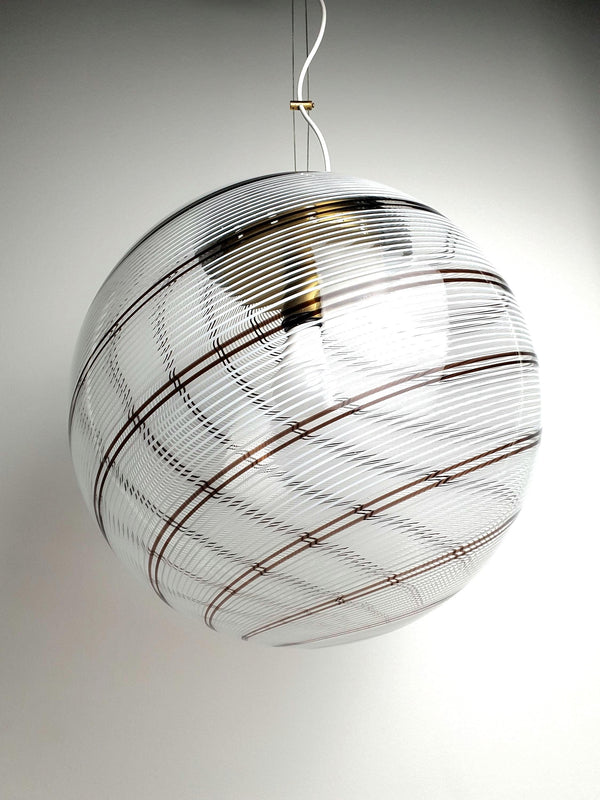
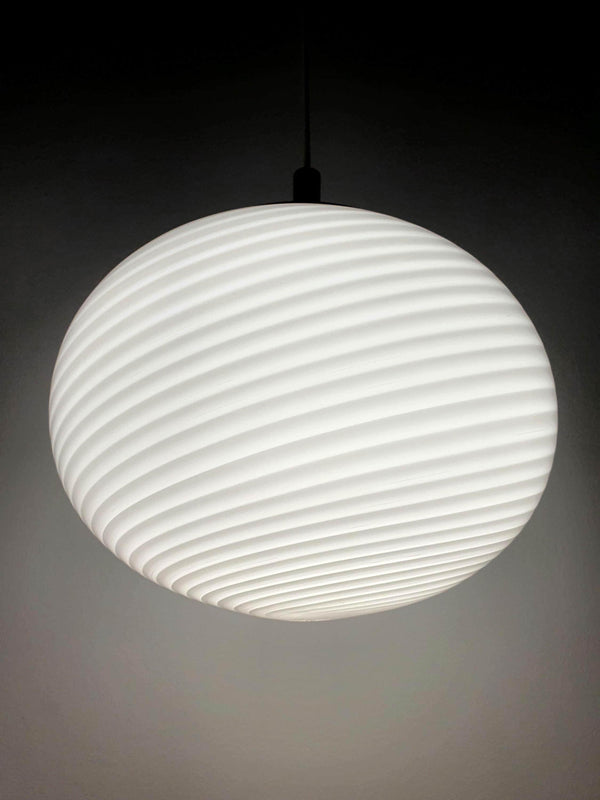
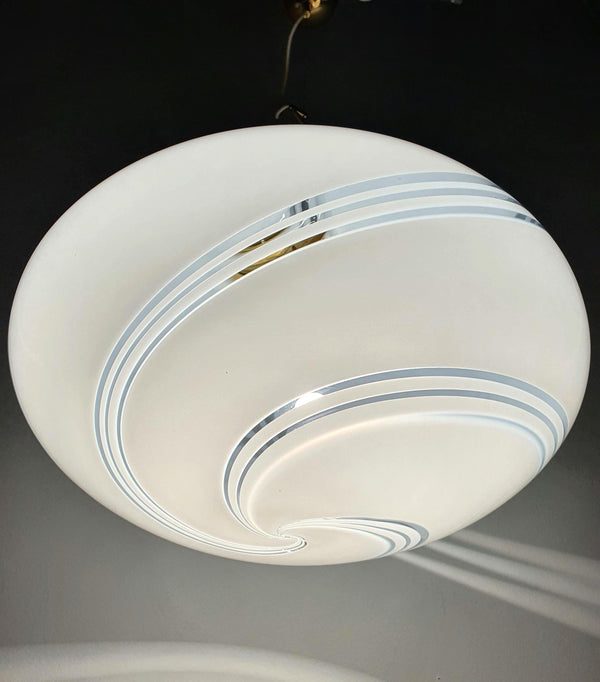
If you are researching Murano glass lighting, you will encounter both vintage pieces — produced in Italy from the 1950s through the 1980s — and modern Murano glass made today on the island. Both are genuine Murano glass. But they are not the same thing, and for most buyers, particularly those interested in lighting, the distinction matters enormously.
This article explains the real differences between vintage and modern Murano, where each excels, and which is the better choice depending on what you are looking for.
What Both Have in Common
Both vintage and modern Murano glass are made on the island of Murano, in the Venetian lagoon, using traditional mouth-blown and hand-worked techniques passed down through generations. Both involve genuine craft skill. Both can be beautiful. The name "Murano glass" is not a quality guarantee in itself — it is a geographic designation, like Champagne or Parmigiano-Reggiano. What matters is the specific piece, the maker, and the period.
The Case for Vintage Murano
Design at its peak
The postwar decades — roughly 1950 to 1980 — represent the undisputed high point of Murano lighting design. Italian manufacturers were working at the intersection of modernism, craft tradition, and genuine design ambition. Makers like Mazzega, La Murrina, Vistosi, and De Majo were producing forms that were genuinely innovative: disc pendants, globe clusters, organic petal shades, bold colour combinations in amber, cobalt, caramel, and smoked glass.
These designs were not decorative afterthoughts. They were serious design objects, conceived by designers who understood both the material and the moment. Many remain more contemporary-looking today than anything produced in the decades since.
Glass quality
Vintage Murano glass from the postwar period was produced when the island's furnaces were operating at full capacity, with master glassblowers at the height of their craft. The density, colour saturation, and luminosity of the best vintage pieces is difficult to match in contemporary production. Sommerso layering, lattimo opacity, and the particular quality of vintage amber and caramel glass have a depth that collectors and designers consistently identify as superior to modern equivalents.
Hardware and construction
Vintage Italian lighting used solid brass, chrome, and nickel hardware — materials chosen for durability and appearance. The metalwork on a well-preserved 1960s Italian pendant or sconce has a weight and finish that modern production rarely replicates. Contemporary pieces, even from reputable makers, often use lighter alloys or simplified fittings to control costs.
Value
A quality vintage Murano pendant purchased from a specialist dealer at a fair price will hold its value and, for attributed pieces, is likely to appreciate. Modern Murano glass, like most new decorative objects, depreciates the moment it leaves the showroom. For buyers who think of their purchases as both objects to live with and long-term investments, vintage has a clear structural advantage.
Uniqueness
Every vintage piece is singular. It was made once, used, and survived. No two are identical. Modern Murano, even when hand-made, is produced in series — the same design made repeatedly to order. If you want something genuinely one of a kind, vintage is the only option.
The Case for Modern Murano
Modern Murano is not without merit, and there are situations where it is the right choice.
Electrical compliance
New Murano lighting is produced to current electrical standards, with CE certification and modern wiring. For buyers who want a plug-and-play solution with no need for electrical inspection or rewiring, modern pieces offer simplicity that vintage cannot match without additional work.
Matching sets
If you need six identical pendants for a restaurant or a perfectly matched pair of sconces for a symmetrical installation, modern production can deliver consistency that vintage cannot. Vintage pieces are inherently variable — even pieces from the same production run will differ slightly.
Specific commissions
Some contemporary Murano makers will produce bespoke pieces to specification — a particular colour, size, or form. This is not possible with vintage.
Contemporary design language
A small number of modern Murano designers are producing genuinely interesting work. If your interior calls for something that reads as new rather than vintage, and you specifically want Murano glass, contemporary production is the appropriate choice.
Where Modern Murano Falls Short
For most buyers comparing vintage and modern Murano lighting, the honest assessment is that modern production rarely justifies its price premium over vintage.
Price. Quality modern Murano lighting from established makers is expensive — often more expensive than comparable vintage pieces of objectively superior design and glass quality. You are paying for newness and certification, not for better craft or more interesting design.
Design. The most commercially successful modern Murano lighting tends toward the decorative and the safe. The genuine design ambition of the postwar period — the willingness to make something strange and beautiful — is largely absent from mainstream contemporary production.
The reproduction problem. The modern Murano market has a significant counterfeiting and misrepresentation problem. "Made in Murano" labels are not regulated with the rigour buyers assume. Some pieces sold as modern Murano are produced elsewhere and finished on the island, or are made by workshops with only a nominal connection to traditional craft. With vintage, the glass itself — its density, colour, and character — is the evidence of authenticity.
Side-by-Side Comparison
| Vintage Murano (1950s–80s) | Modern Murano | |
|---|---|---|
| Design quality | Peak — genuine modernist ambition | Variable; often conservative |
| Glass quality | Exceptional; deep colour, density | Good to excellent; rarely matches vintage peak |
| Hardware | Solid brass, chrome, nickel | Often lighter alloys |
| Electrical | Requires inspection; rewiring may be needed | CE certified, modern wiring |
| Uniqueness | Every piece singular | Produced in series |
| Value retention | Holds and appreciates | Depreciates as new object |
| Price | Fair to high depending on attribution | High to very high for quality makers |
| Availability | Finite; requires specialist sourcing | Available to order |
Which Should You Buy?
For lighting specifically, vintage is almost always the better choice — and the argument is strongest in the mid-century sweet spot of 1955 to 1975.
If you want the best design, the best glass, the best hardware, and the best long-term value, vintage Murano from the postwar period is where all of those things converge. The electrical work required — a professional inspection, rewiring if needed — is a one-time cost that adds perhaps €100–200 to the total, and results in a piece that will last another fifty years.
Modern Murano makes sense when you need certified compliance out of the box, require matched multiples, or are commissioning something bespoke. For everything else, the vintage market offers more interesting objects at fairer prices.
A Note on Sourcing
The quality of vintage Murano available to you depends entirely on where you buy. Auction houses offer access but add significant buyer's premiums. Major resale platforms add further margin. Specialist dealers who source directly — and who can speak to the provenance, condition, and attribution of each piece — offer the most direct route to genuine value.
Every piece in our collection is tested before listing, described honestly, and priced to reflect the object rather than the infrastructure around it. If you have questions about a specific piece — its origin, its glass, its electrical condition — we are here before you buy.
Frequently Asked Questions
Is vintage Murano glass better quality than modern?
For lighting specifically, the best vintage pieces from the 1960s and 70s consistently outperform modern equivalents in glass density, colour depth, and hardware quality. This is not universally true — there is poor-quality vintage glass just as there is excellent modern production — but the peak of vintage Murano is a high bar that contemporary makers rarely clear.
How can I tell if Murano glass is vintage or modern?
Vintage pieces show appropriate signs of age: slight patina on metal parts, minor wear consistent with decades of use, and glass characteristics — density, colour depth, bubble placement — that reflect hand production at a particular moment. Modern pieces, even when hand-made, have a different character: cleaner hardware, more consistent glass, and often a slightly more polished finish. Labels and certificates help but are not definitive.
Is modern Murano glass authentic?
Genuine modern Murano glass — made on the island by skilled glassblowers — is authentic Murano glass. The concern is not authenticity but value: whether the design, quality, and price justify the purchase compared to vintage alternatives. There is also a significant market in pieces falsely labelled as Murano that are made elsewhere.
Does vintage Murano lighting need rewiring?
Not always, but it should always be inspected by a qualified electrician before installation. Original wiring from the 1960s and 70s may have degraded insulation. Rewiring is straightforward and inexpensive relative to the value of the piece. We test every piece before listing and can advise on electrical condition.
Which Murano glass makers are most collectible?
For lighting: Mazzega, La Murrina, Vistosi, De Majo, and Venini are the most documented and sought-after. Anonymous pieces of exceptional quality are also highly collectible — the glass and design speak for themselves regardless of attribution.
Browse Vintage Murano Lighting
Each listing specifies material, origin, condition, and compatibility. We are happy to advise on any piece before you purchase.
Wall Sconces · Ceiling Lights · Pendant Lights · Table Lamps
Mid-Century Modern · Space Age · Floral · New Arrivals
Contact us — we are happy to advise on any piece before you buy.